Imagine opening your laptop and realising the machine calculating your requests is actually using living human neurons alongside silicon hardware. A new project in Singapore is pushing the boundaries of computing by linking millions of lab-grown neurons to conventional computing hardware, creating a system that could open a new approach to information processing.
Artificial intelligence grows smarter every day at copying human reasoning, yet the physical machinery powering these models remains largely based on synthetic hardware. Traditional systems rely heavily on standard silicon hardware manufactured by industry giants such as Nvidia.
While these microchips use electronic pathways that faintly mirror biological neural networks, they operate on a fundamentally different level. Now, a research initiative based in Singapore is challenging that standard setup by experimenting with lab-grown human neurons to build a new breed of hybrid hardware.
16 Million Human Neurons Power the System
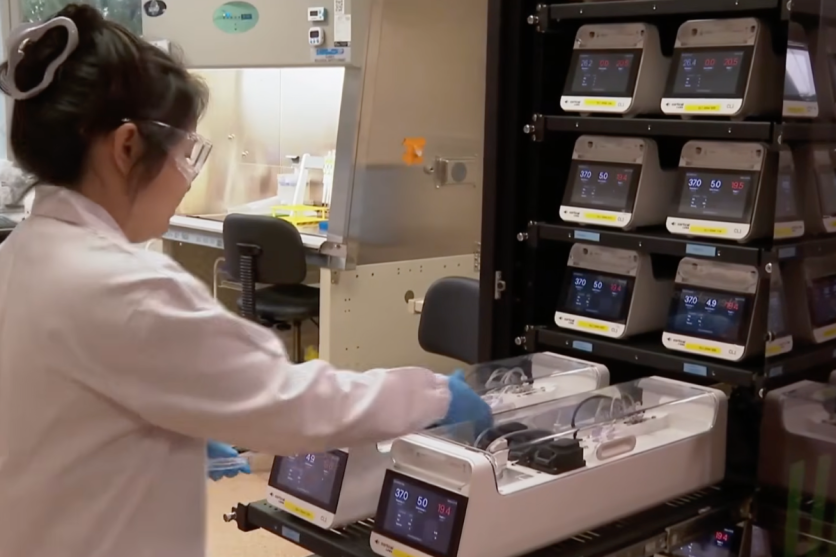
Teams from the Yong Loo Lin School of Medicine at the National University of Singapore joined forces with facility manager DayOne and the Australian firm Cortical Labs to engineer the system. Together, the collaborators embedded active human neurons directly into server equipment, resulting in what NUS describes as the world's first independently operated biologically integrated server rack containing 20 active units.
Inside the NUS Life Sciences Institute facility, 20 specialised CL1 units sit together within a single standard server rack. Each individual unit houses roughly 800,000 cultivated human neurons, which would put the total across the rack at approximately 16 million. The figure is an estimate based on the reported number of neurons per unit.
The neurons are grown from human stem cells rather than taken from human brains.
Living Cells Act as Biological Processors
Rather than relying solely on traditional microchips, these living cells function directly as biological processors. They intercept incoming electrical impulses, interpret the data and transmit responses back to the digital hardware, enabling the machine to learn and adjust in ways that resemble biological learning.
To build this hybrid hardware, Cortical Labs cultivates human stem cells in a lab before positioning the resulting living tissue onto a specialised silicon chip.
This microchip features an array of microscopic electrodes capable of transmitting electrical currents into the neural network and reading the feedback signals generated in response.
A specialised platform called biOS, developed by Cortical Labs as a biological intelligence operating system, ties the living cells into the broader network.
This software establishes a continuous loop of communication by transmitting data to the neural tissue, capturing how the cells react and feeding those responses back into the machine. Instead of blindly executing rigid lines of code, the living components process incoming details and adapt dynamically over time.
Feeding the 16-Million-Neuron Server
The system's most unusual requirement is that its computing components are alive. The CL1 includes built-in equipment to keep the neurons viable for up to six months, while technicians at the Singapore facility supply oxygen, carbon dioxide, nitrogen and a fresh mixture of sugar, nutrients and pH buffers every three days.
Why Singapore Is Turning to Human Brain Cells
Energy efficiency is the primary driver behind integrating organic tissue into server rooms. While the human mind processes vast amounts of information on minimal power, silicon processors demand significant amounts of electricity. Scientists are exploring whether biological cells can shoulder some computational workloads while potentially reducing energy use.
According to Cortical Labs, the CL1 architecture excels in scenarios marked by scarce training data or rapidly shifting environments. Such capabilities offer distinct advantages for humanoid robotics, fraud detection and cybersecurity — fields where systems must adapt quickly.
What the Brain-Powered Computer Could Change
Beyond tech applications, the platform could serve as a research tool for medical investigations, pharmaceutical development and neurological research, giving specialists insight into how living brain cells process and adapt to new information.
Frequently Asked Questions
- What is the project in Singapore about?The project involves linking millions of live neurons to silicon hardware to create a new computing system.
- Why are human brain cells used in computing?Human brain cells are used for their energy efficiency and ability to process information with minimal power.
- What are the potential applications of this technology?Applications include humanoid robotics, fraud detection, cybersecurity, medical investigations, pharmaceutical development, and neurological research.


